
Emulator or Software (Remap)? Which One Is Right for Your Vehicle?
The workshop hands you a quote: “NOx sensor’s gone, the catalyst is suspect too, full repair will cost you this much.” The fitter next to him shrugs and says, “Forget it, I’ll just delete it in software.” Then a mate chimes in with, “Fit an emulator, ten-minute job.” Three routes, three prices, three different levels of risk. So which one actually suits your vehicle?
To make that call properly you first have to separate two ideas that get muddled constantly. Out in the trade, “software” and “emulator” are often talked about as if they were the same thing — yet technically they sit at opposite ends of the spectrum. One goes inside the engine brain; the other feeds the brain an “all is well” message from outside. That distinction decides both the money leaving your pocket and the risk you’re taking on.
What Is a Remap (Software)?
A remap, in short, is the modification of the software inside the engine ECU. On the emissions side that means the technician removes the brain from the vehicle — or reaches it through the OBD socket — reads the map inside, edits it so the AdBlue/DPF/EGR software routines are switched off, and writes the modified file back to the brain (a flash).
Here’s the critical bit: the software route physically touches the brain’s memory. The original file is wiped and a modified version put in its place. After every change, the checksum (a validation total) has to be recalculated; get it wrong and the brain rejects the file outright. Done correctly, the vehicle runs as though those sensors were never there. But “done correctly” is a phrase worth leaning on hard.
In practice: a good remapper always takes a backup of the original file before starting. Without a backup, if anything goes sideways, returning the brain to factory condition becomes all but impossible. The single most valuable question you can ask before a remap is: “Are you taking a backup of the original file?”
Remapping isn’t used only for emissions deletes; it also covers performance gains and chip tuning. But since emissions systems are the subject here, we’re treating software purely in the context of switching off AdBlue/DPF/EGR.
What Is a Hardware Emulator?
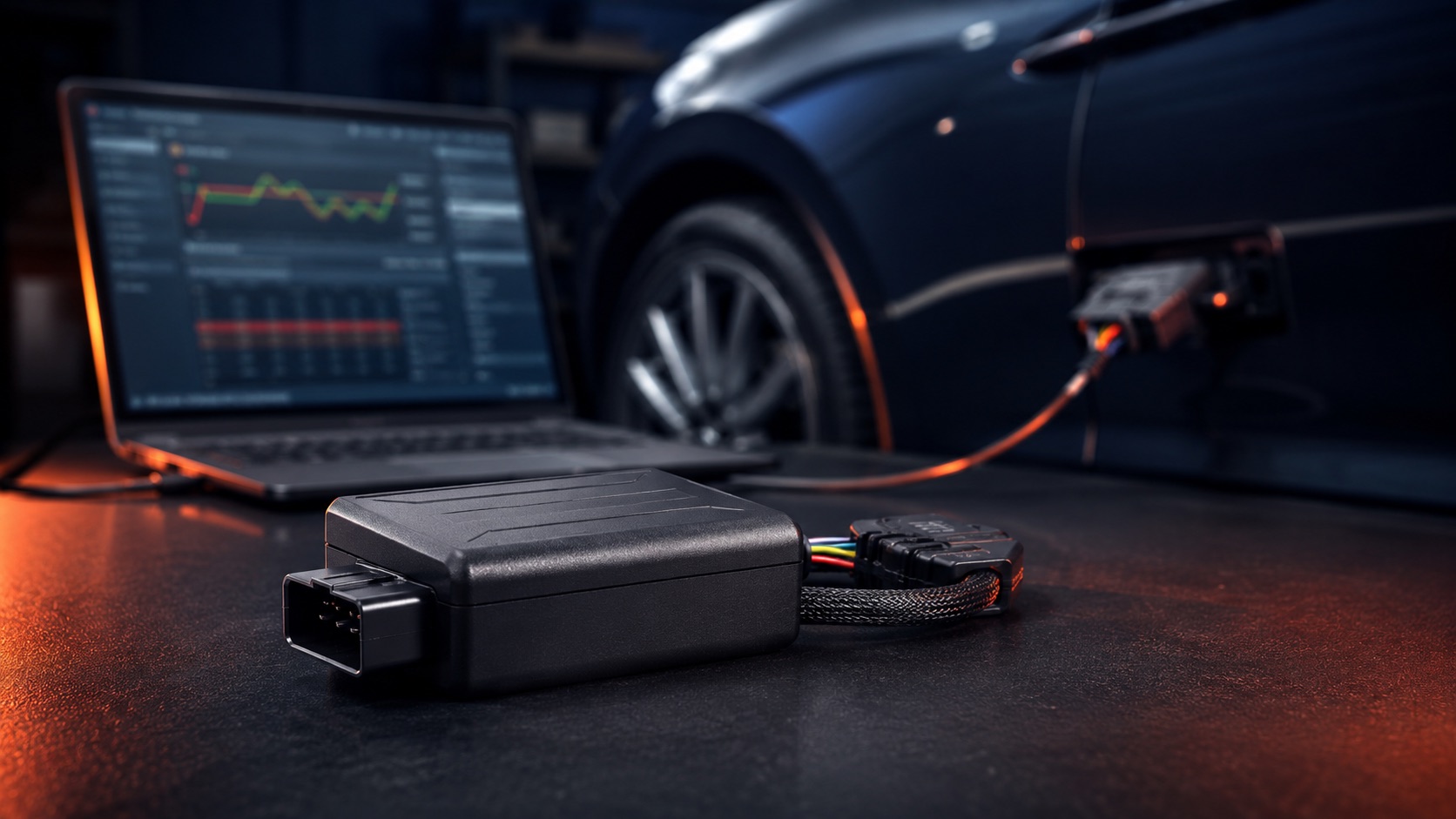
An emulator never goes inside the brain at all. Instead, it’s a physical device that stands in for the faulty system (SCR, DPF, EGR, NOx). It clips into the relevant control-unit socket and feeds the engine brain fake but consistent signals — as if that system were ticking along perfectly. Because the brain receives “AdBlue dosing is normal, NOx values are in range,” it doesn’t raise a warning light, cut power, or drop the vehicle into protection mode.
The key difference is right here: an emulator doesn’t lay a finger on the brain’s software. The original ECU file stays exactly as it is, the checksum is untouched. That’s why the devices we sell are plug-and-play hardware — no remap, no soldering, no cutting. The moment you unplug the device, the vehicle goes straight back to running on factory logic.
Different systems can call for different emulators; you can check the model that fits your vehicle in our emulator shop with your chassis number to hand.
Head to Head: Emulator or Software?
Put the two methods side by side and the picture sharpens. The comparison below is built around the five criteria that come up most often out in the field:
| Criterion | Hardware emulator | Software (remap) |
|---|---|---|
| Works on a locked ECU? | Yes — the brain is never touched, so the lock is no obstacle | Usually no — can’t be applied to a read/write-locked brain |
| Reversibility | High — unplug the device, factory state returns | Low — hard to undo without a backup of the original file |
| Physical risk (brick) | None — nothing is written to memory | Present — the ECU can lock if the flash/checksum is interrupted |
| Fitting time | ~10–20 minutes | ~1–3 hours (removal + read + write) |
| Warranty / traceability | Software signature stays original | Modified signature can be read on a dealer scan |
As the table shows, each method has its own logic. On a suitable, unlocked brain, software can deliver a clean result. But the moment locked brains enter the equation, the whole calculation changes.
Locked Euro 6 Brains: The Factor That Changes the Rules
With Euro 6, manufacturers bolted serious security layers onto their engine brains. The aim was to stop emissions hardware being tampered with easily — and that layer has effectively closed the software route on a lot of vehicles. A few ECU families in particular are known in the trade as “locked”:
- MD1CS003 / MD1CS006 / MD1CS012 — widespread across PSA, Toyota and some shared platforms; read/write is protected by security.
- MD1CE101 / MD1CS069 — you’ll meet these in the Iveco and commercial-vehicle group; opening them on the bench is often simply not possible.
- SID321 and SID212 — SID321 on the Renault/Nissan/Opel side, SID212 on the Ford side; the security layer makes any software intervention hard going.
Here’s the critical point: the job is solved by looking at the brain code, not the badge. One version of a given Ford model may carry a SID212 while another carries an MD1CS003, and the two need completely different solutions. Likewise, MRD1 brains on the Mercedes side and SID321 in the Renault group each demand their own approach. That’s why “is there software for a Ford?” is the wrong question; the right one is “which ECU is in this vehicle?”
Watch out: forcing a software attempt onto a locked Euro 6 brain is the most dangerous scenario of the lot. If the flash stalls halfway while trying to beat the security layer, the brain can lock permanently — the trade calls this a “brick.” A bricked ECU can usually only be saved by fitting a new one, and that bill can run well beyond the original repair quote.
This is exactly where the emulator’s logic comes into its own. An emulator never wrestles with the brain’s lock; it doesn’t try to open, read or write it. It simply mimics the system’s output from outside. So on a locked brain like the MD1CS003 — where the software route is completely closed — a hardware emulator often remains the only workable solution.
How Do You Find Out Your Brain Code?
The label on the engine brain usually lists the ECU code alongside the Bosch/Continental part number. You can also cross-reference it against the engine type and the VIN on your registration document. If you’re not sure, just send us your chassis number — we’ll pin down which brain is fitted and work out the right solution for it together.
The Emulator’s Standout Advantages (and Its Honest Limits)
What makes the emulator so widely chosen is really the sum of a few concrete advantages that reinforce each other:
- The brain stays untouched: because the original software signature doesn’t change, it leaves no trace on the resale or dealer side.
- Reversible: if you’re selling the vehicle or want to return to factory condition, you just unplug the device.
- Fast fitting: around 10–20 minutes on average; no cutting, soldering or fiddly wiring.
- Works on locked brains: it keeps the door open on the Euro 6 ECUs where software can’t be applied.
- No brick risk: with nothing written to memory, the chance of locking the brain disappears.
So is the emulator a cure-all? Honestly, no. An emulator is a piece of hardware too; a poorly built device, or one not written specifically for the vehicle, can send incomplete or inconsistent signals and light the warning lamp again. The trick lies in the device being coded for that specific ECU. Which is why the claim of “one emulator that fits every vehicle” isn’t realistic — the correct match is everything.
So Which One for Your Vehicle?
The decision really comes down to a handful of clear questions. Is your brain open and suitable for software, or is it a locked Euro 6 ECU? Will you be taking the vehicle back to a dealer under warranty in future, or is leaving no trace important to you? Do you want to keep the option of reversing it open?
To put it plainly: if your brain is open and you trust an experienced remapper who takes backups, a remap can give a clean result. But if your brain is locked, if reversibility matters, or if you’d rather not gamble on brick risk at all, a hardware emulator is by far the more sensible choice. The reason the needle tips towards the emulator on most current diesels is precisely these security locks. If you’d like a deeper look at how the AdBlue/SCR system works and why it gets deleted, it’s worth a read of our AdBlue (SCR) guide.
If you’re unsure which brain is in your vehicle, settle that before you decide anything. Reach us on WhatsApp with your chassis number and we’ll work out the right solution for you together. Trying the wrong method usually ends up costing far more than the fault you started with.
Tip: don’t judge the decision on price alone. If the cheapest quote is a software attempt that risks bricking a locked brain, that “bargain” can end in a full brain replacement. A decision that factors in total risk is always the more economical one in the long run.
Deleting or replacing emissions hardware is subject to legal restrictions on road use and roadworthiness inspection in some countries; our products are supplied for off-road, export, motorsport and testing purposes only, and legal responsibility rests with the user.
Frequently Asked Questions
Which is safer — an emulator or a software remap?
In terms of physical risk, an emulator is safer, because the ECU's memory is never touched. A remap flashes the brain; if the write is interrupted the ECU can lock up (a 'brick') and become unusable.
Why do locked Euro 6 brains often only work with an emulator?
On the MD1CS003, MD1CE101 and some SID-series brains, read/write is sealed behind a security layer. Those ECUs often can't even be opened on the bench, so with the software route closed a hardware emulator that simulates the system from outside is the only practical option left.
Can I reverse it after an emulator is fitted?
Yes. The emulator plugs into the original socket — no cutting, no soldering. Unplug the device, refit the original connector, and the vehicle returns to factory condition.
Does a remap change the ECU's serial number?
No, but it changes the contents. Some franchised dealers can read that the software signature isn't original, which may affect warranty and resale value.
Which is quicker to fit?
An emulator takes around 10 to 20 minutes. A remap usually runs 1 to 3 hours, because the brain has to be removed, read, edited and written back.
Looking for the right emulator for your vehicle?
Send us your make and chassis details and our experts will find the right solution in seconds.