
What Is a NOx Sensor, and How Do You Know It's Failing? P220x Codes and the Emulator Fix
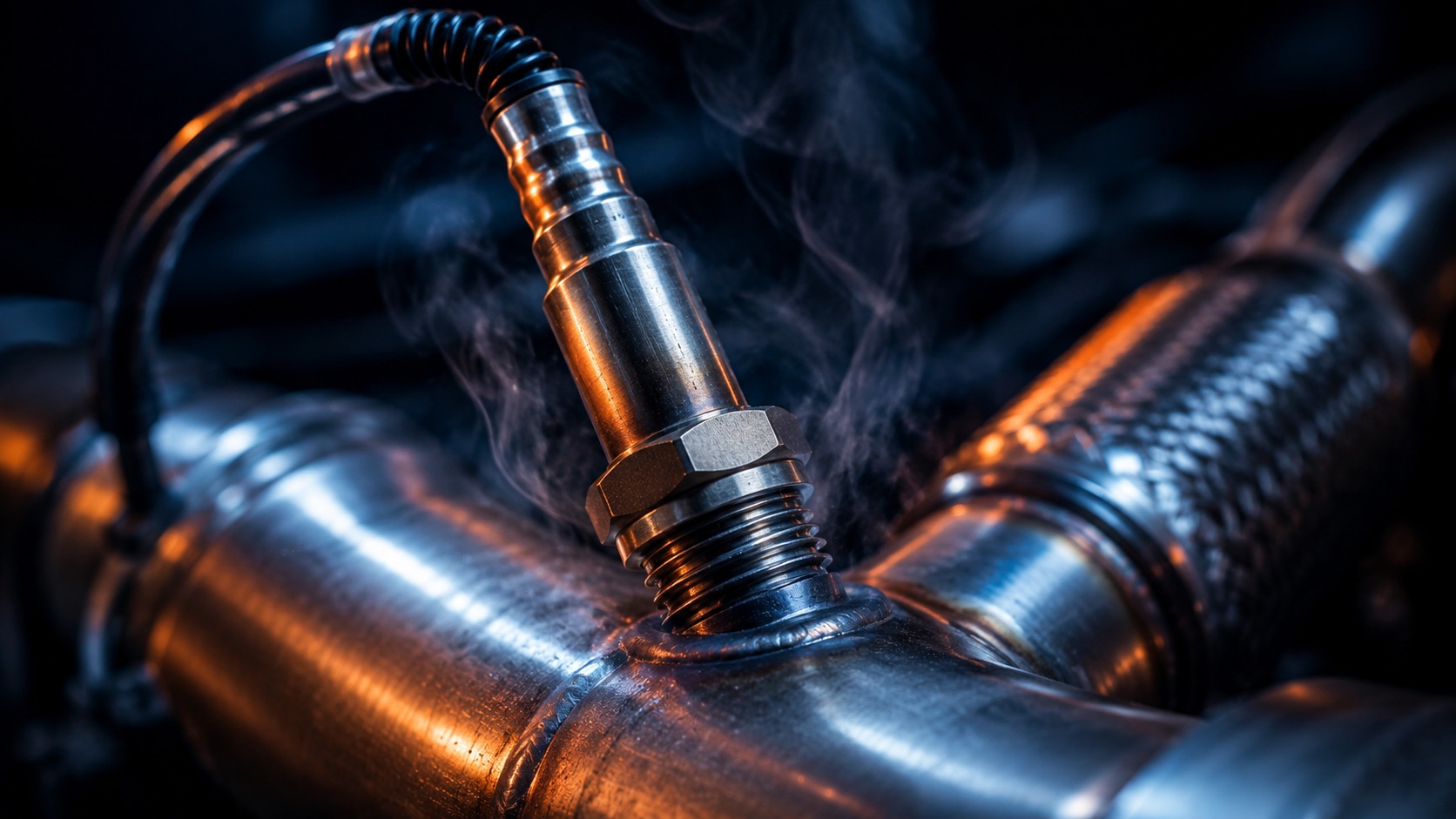
If a technician has told you “your NOx sensor’s dead, and you’ll need to change both of them” — and your heart sank the moment you saw the quote — you’re far from alone. Just about every driver of an AdBlue diesel meets this small but pricey part sooner or later. So what does this sensor actually do that leaves the vehicle nearly paralysed when it dies? And do you genuinely have to hand over four figures every single time?
Let’s nail down the logic first, then move on to the emulator side of things.
What a NOx Sensor Actually Does
A NOx sensor measures the amount of nitrogen oxide (NOx) in the exhaust gas in real time. The engine ECU uses that reading to work out exactly how much AdBlue to inject into the SCR system. In effect, the sensor is the eyes and ears of the vehicle’s emissions control — go blind, and the system can no longer get the dosing right.
Modern Euro 6 diesels typically carry two NOx sensors:
- Upstream (pre-SCR) sensor: measures the raw NOx level entering the catalyst. The ECU reads this to decide “how much urea is needed.”
- Downstream (post-SCR) sensor: measures the gas leaving the catalyst. It confirms the system is genuinely working and that NOx has dropped far enough. It’s a kind of auditor too — if SCR efficiency is poor, this is where it shows up.
The difference between the two readings is the ECU’s report card on the catalyst. If the upstream sensor reads 800 ppm while the downstream one still reads 700 ppm, the brain concludes: “this catalyst isn’t doing its job.” A great many fault codes are born from exactly that kind of logical inconsistency.
In practice: a NOx sensor is not a simple thermometer. It’s a smart module with its own heater circuit, a ceramic measuring cell, and a tiny built-in processor, and it talks to the ECU over the CAN-bus. That’s why, when you ring up expecting “it’s a two-pin sensor, how dear can it be,” the price catches you off guard.
Why Does It Fail So Often?
The NOx sensor works in the harshest corner of the vehicle: high heat, moisture, soot, and vibration. The ceramic measuring cell is heated to 700–800 °C and put through constant heating-and-cooling cycles. That fatigue eventually breaks the cell down. The main causes of failure:
- Thermal fatigue: thousands of heat-cool cycles crack the ceramic element.
- Soot and ash build-up: once the measuring surface is coated, the sensor reads wrong or nothing at all.
- Heater circuit failure: if the internal heater burns out, the cell never reaches operating temperature.
- Connector corrosion and cable damage: the sensor itself may be fine, yet the signal never reaches the ECU.
- Low-quality AdBlue: off-spec urea batters the catalyst and, indirectly, the downstream sensor.
It’s no accident that the downstream (post-SCR) sensor tends to go before the upstream one; the moisture and heat of the gas leaving the catalyst wear it faster. If just one sensor has failed on your vehicle, I’d assume from the outset that the other is next in the queue.
P220x Fault Codes: Symptom, or Diagnosis?
Here’s the critical bit. NOx faults mostly announce themselves through OBD codes in the P2200 to P229F range. But those codes don’t always mean “replace the sensor” — sometimes it’s the wiring, sometimes the catalyst, sometimes the software. The codes we see most often:
| Fault code | Meaning | Likely cause |
|---|---|---|
| P2200 | NOx sensor 1 (upstream) circuit fault | Sensor dead or cable broken |
| P2201 | NOx sensor 1 range/performance fault | Sensor reading slow/incorrectly, soot build-up |
| P2202 | NOx sensor 1 low signal | Heater circuit or supply issue |
| P2209 | NOx sensor 1 heater circuit | Internal heater burned out |
| P229F | NOx sensor 2 (downstream) circuit/performance | Downstream sensor dead or low SCR efficiency |
| P220B | NOx sensor deviation / mismatch | Illogical difference between the two sensors |
Watch out: the same code can be defined slightly differently across different manufacturers’ brains. Don’t trust the code alone without reading “live data” on a diagnostic tool. A technician who can put the upstream and downstream ppm values side by side will separate a sensor fault from a catalyst fault in five minutes. Blind part-swapping tires out both your wallet and your patience.
The Symptoms You’ll Actually See
Even without a code reader, the vehicle will tell you:
- Engine warning light (MIL) stays on.
- Gradual power loss: mild at first, then a clear torque limit after a few hundred kilometres.
- AdBlue warning and countdown: on-screen messages of the “engine will not start in X km” variety.
- Speed limiting / limp mode: on some models speed drops to a 20–60 km/h band.
- Higher fuel consumption: the ECU distorts its strategy trying to hold the emissions target.
These symptoms don’t arrive all at once; they usually worsen step by step. If you’re saying “it was perfectly fine yesterday and today it won’t crank,” the countdown was almost certainly running for days — you only just felt the difference.
Why Is a Genuine Sensor So Expensive?
Because it carries a micro-computer of its own, the NOx sensor is expensive to make. Add the manufacturer’s genuine-part pricing, import costs, and labour, and the total climbs fast. On top of that, most vehicles have two sensors, and when one goes the other is usually nearing the end of its life too.
The bit that hits the wallet: a single genuine NOx sensor typically starts in the mid hundreds and runs to multiples of that on imported passenger cars. Two sensors plus labour, and the total reaches a serious figure even on a mid-range vehicle. Worse still: fit a cheap aftermarket sensor and the same code can come back within a few months. “Buy cheap, buy twice” could have been written for this exact scenario.
And there’s this: you fit the new sensor, the code clears, and three months later the same P229F is back — because the real problem was in the catalyst efficiency or the wiring harness. It’s that loop that pushes many drivers to look for a permanent, sensible fix.
How a NOx Sensor Emulator Works
A NOx sensor emulator is a plug-and-play device that electronically simulates the healthy signal a failed sensor should be sending the ECU. It isn’t software or a remap; it’s a physical module that plugs into the vehicle’s original socket. The engine brain sees a properly working NOx sensor in front of it and never enters the fault loop.
So:
- The warning light goes out and the fault code doesn’t return,
- Torque limiting and limp mode never engage,
- The AdBlue countdown and “engine will not run” warnings stop,
- The vehicle’s power and stability stay exactly as they were on day one.
Fitting needs no cutting or soldering, takes 10–15 minutes on average, and can be unplugged to return the vehicle to factory condition whenever needed. To find the right model for your vehicle, take a look at our NOx and AdBlue emulator range, and you might also read our guide on what the AdBlue (SCR) system is and why it gets removed.
The ECU Code Decides, Not the Badge
The biggest mistake in choosing an emulator is thinking “my car’s a Ford, so I’ll get the Ford emulator.” The right match is made by the engine ECU code — because the same manufacturer can fit different brains, and different manufacturers can share the same brain.
| Brand group | Common ECU |
|---|---|
| Renault / Nissan / Opel | MD1CS016, SID321 |
| Ford | SID212 |
| PSA (Peugeot/Citroën) / Toyota | MD1CS003 |
| Iveco | MD1CS069, MD1CE101 |
| Mercedes | MRD1 |
When you reach us with your VIN and ECU code, we can pin down the emulator with the correct pinout without any guesswork. A mismatched ECU is the number-one reason behind the “I fitted it but it didn’t work” stories.
Replace or Emulate? A Quick Decision Guide
If you’re a driver who has to put the vehicle through every roadworthiness inspection and is tied to formal processes, the genuine-repair route takes priority for you. But if you’re in off-road, export, in-fleet logistics, or test use, and you’re fed up with burning through sensor after sensor and being stranded on the road, an emulator offers a far more comfortable solution on both cost and uptime.
When you decide, ask yourself these three questions: How often does the vehicle burn a sensor? What does being stranded actually cost you? And what will you use this vehicle for in the period ahead? As the answers sharpen, so does the right road.
Note: removing or modifying emissions equipment is subject to legal restrictions on road use and roadworthiness inspection in some countries; our products are supplied for off-road, export, motorsport, and testing purposes, and legal responsibility rests with the user.
Frequently Asked Questions
Can I still drive with a failed NOx sensor?
Over a short distance, yes — but the system has already started counting down. Torque is usually cut within a few hundred kilometres, speed drops to a 20–60 km/h band, and on the next start the engine may refuse to crank at all.
Which of the two NOx sensors fails more often?
The downstream (post-SCR) sensor is the one that burns out first. It sits in the hot, wet gas leaving the catalyst, so its ceramic measuring cell degrades over time. The upstream sensor, nearer the turbo outlet, sees a slightly lighter heat load.
Does a P229F code always clear with a new sensor?
Usually, but not always. A broken wiring harness, a corroded connector, or a low-efficiency SCR catalyst can throw the same code. If you fit a new sensor and the code comes straight back, the fault isn't the sensor.
How much does a genuine NOx sensor cost?
It varies by make and model, but a single genuine sensor typically starts in the mid hundreds and climbs much higher on imported passenger cars. When both sensors go, the parts bill doubles — and labour is on top of that.
Will a NOx sensor emulator harm the engine ECU?
No. The emulator plugs into the original socket, needs no cutting or soldering, and only feeds the ECU a healthy sensor signal. Unplug it and the vehicle returns to exactly how it was.
Looking for the right emulator for your vehicle?
Send us your make and chassis details and our experts will find the right solution in seconds.