
Commercial Van & Fleet AdBlue Guide: Transit, Sprinter, Master

Friday afternoon, three drops sitting on the loading bay waiting to go out. The driver rings up: “The Transit’s stranded, the dash is lit red, speed’s dropped to 60 and the countdown has started.” That is the sentence that puts a cold sweat down the back of anyone who runs a fleet. Because a single van’s AdBlue fault doesn’t just leave that van where it stands; it drags a recovery bill, days lost in the service queue and the cost of every missed run behind it.
On the commercial van side things bite harder than on a passenger car. A Transit, Sprinter or Master might do 200-300 stop-start kilometres a day, the engine forever cycling cold to hot, and the SCR system gives up under that pace far sooner than it would on a car. In this guide I go through which control unit each make uses, the typical fault codes, why they fail so early, and the lasting way to keep a fleet from getting stranded on the road.
Why Does AdBlue Fail Faster in a Fleet Than on a Car?
The SCR system needs one thing to work properly: heat. Until the catalyst reaches its operating temperature, AdBlue won’t react fully. On a van doing long motorway runs the exhaust stays hot and the system works efficiently. But the life of a delivery van working the city is a different story entirely.
Stop, start, idle, stop again. Traffic lights, loading, unloading, short hops. The exhaust simply never reaches its ideal temperature. Half-reacted AdBlue leaves a hard white deposit around the catalyst and injector; we call it crystallisation. That deposit clogs the injector, upsets the dosing pressure and throws off the sensor readings.
In practice: A fleet van covering 50,000-100,000 km a year, most of it in a city stop-start cycle, will throw an AdBlue fault far earlier than a van doing the same distance on the motorway. The problem isn’t how many kilometres, it’s how those kilometres are driven.
I looked at how crystallisation forms and why it’s so damaging in more depth in the AdBlue crystallisation and freezing problem article. On the fleet side this isn’t theory; it’s a line item that lands straight on the monthly maintenance budget.
Ford Transit: SID212 and the Metering Pump’s Weak Spot
The Transit, the most common van on the road, has a very recognisable fault profile on the AdBlue side. The system is run by the SID212 control unit, and on these vans the fault almost always strikes in the same place: the metering pump.
Field data shows the metering pump is by far the most common source of AdBlue faults on the Transit. The pump is the part that draws AdBlue from the tank and delivers it to the injector under pressure, and in stop-start use the crystallised deposits shorten its life considerably. The typical scenario: at around 160,000 km the pump starts to tire, the system can’t hold pressure and the dash lights the warning.
Caution: Replacing the metering pump on a Transit can be a costly item on its own. Add labour, likely injector cleaning and faults that may recur afterwards, and returning to the workshop more than once in the short term becomes the rule rather than the exception.
When the warning light comes on in a Transit, panicking and trying to fix it by topping up AdBlue rarely works; the problem isn’t the fluid level, it’s the mechanism that pumps the fluid.
Mercedes Sprinter: The MRD1 Brain and the “Three-Test” Logic
On OM651 and OM654 Sprinters things lean more on software. The system is run by the MRD1 control unit, and this brain has a curious way of working: it doesn’t light the lamp the moment it sees a fault. Instead it runs its own self-test, and only warns the driver after three consecutive failed tests.
So when you see a fault code on a Sprinter, the problem has actually been quietly running for a while. The good news: most Sprinter AdBlue faults turn out to be software or sensor related; a warning doesn’t inevitably mean an expensive mechanical part. Here are the typical codes you’ll come across:
| DTC Code | Meaning |
|---|---|
| P13DF | General AdBlue/SCR system fault |
| P203B | AdBlue level sensor fault |
| P20FA | Reductant heater/supply circuit (electrical) |
| P208A | Metering pump output electrical fault |
These codes alone don’t tell you exactly which part has gone; they need reading and interpreting with a diagnostic tool. A level-sensor code like P203B can point to a relatively cheap repair, while a system-wide P13DF may be the first sign of a far broader chain of faults. I covered how these codes relate to limp mode (restricted running) in detail in the AdBlue fault symptoms and limp mode article.
Renault Master and Trafic: SID321 and the Misleading DF050 Code
The Master and its sibling the Trafic use the SID321 control unit, and the most critical code you’ll meet on these vans is DF050. Here’s the trap: DF050 doesn’t point to a single part. It’s a collective code that gathers the injector, the metering unit and the NOx sensors all under one roof.
So when the diagnostic tool shows DF050, you can’t say “that part’s failed”; it takes extra tests to narrow down which component is responsible. And this is where the real cost begins: on the Master the metering pump is built into the tank and isn’t sold as a separate part. If the pump is faulty, in most cases the whole tank assembly has to be replaced. That pushes the repair cost noticeably higher than on the other makes.
In practice: When you see DF050 on a Master, don’t rush to buy parts. Because the code is collective, correct diagnosis comes first; every pound spent on the wrong part comes back with a far bigger bill alongside it if it turns out to be the tank-integrated pump.
Fiat Ducato: The Locked-ECU Question on Post-2021 Models
The Ducato is a fleet favourite on both the motorhome and the heavy-delivery side. But there’s a significant technical change on 2021-and-later models: these vans use the MD1CS069 locked control unit. Being “locked” means outside intervention in the unit’s software (remaps, software-based deletes and the like) becomes far harder and riskier.
That’s an important distinction for Ducato owners. Solutions that require touching the software are either not possible on this generation or put the ECU at risk. A hardware-based solution that plugs into the socket, on the other hand, never touches the unit’s software, so it’s unaffected by this locking issue. You’ll also find the general layout of the MD1-family brains and which vans carry them in the What is MD1CS003 and which vehicles it deletes AdBlue on article.
Make-Model-ECU-Code Table: For the Fleet at a Glance
The table below brings the most common commercial vans together in one place with their control units and typical fault profiles. For fleet managers this is the short way to know in advance which van has which weak spot.
| Make | Model | ECU | Typical Fault / Code |
|---|---|---|---|
| Ford | Transit | SID212 | Metering pump (most common source); after ~160,000 km; medium/high repair cost |
| Mercedes | Sprinter (OM651/OM654) | MRD1 | P13DF, P203B, P20FA, P208A; warns after 3 failed tests; mostly software/sensor related |
| Renault | Master / Trafic | SID321 | DF050 (collective code: injector + metering unit + NOx); tank-integrated pump, expensive |
| Fiat | Ducato (2021+) | MD1CS069 | Locked ECU; software intervention hard/risky |
Caution: A van going down on the road isn’t just that van’s repair bill. Calling recovery, the days spent in the service queue, the deliveries not made on those days and the promise broken to the customer; the real cost is that total. On the fleet side an AdBlue fault isn’t a maintenance item, it’s a direct operational risk.
The Emulator: A Removable Hardware Fix for Fleets
Every fault I’ve described so far shares one trait: they can all recur. You replace a Transit’s pump and a sensor goes six months later; you renew the tank assembly on a Master and DF050 comes back from another component. At fleet scale that means a service loop that never ends.
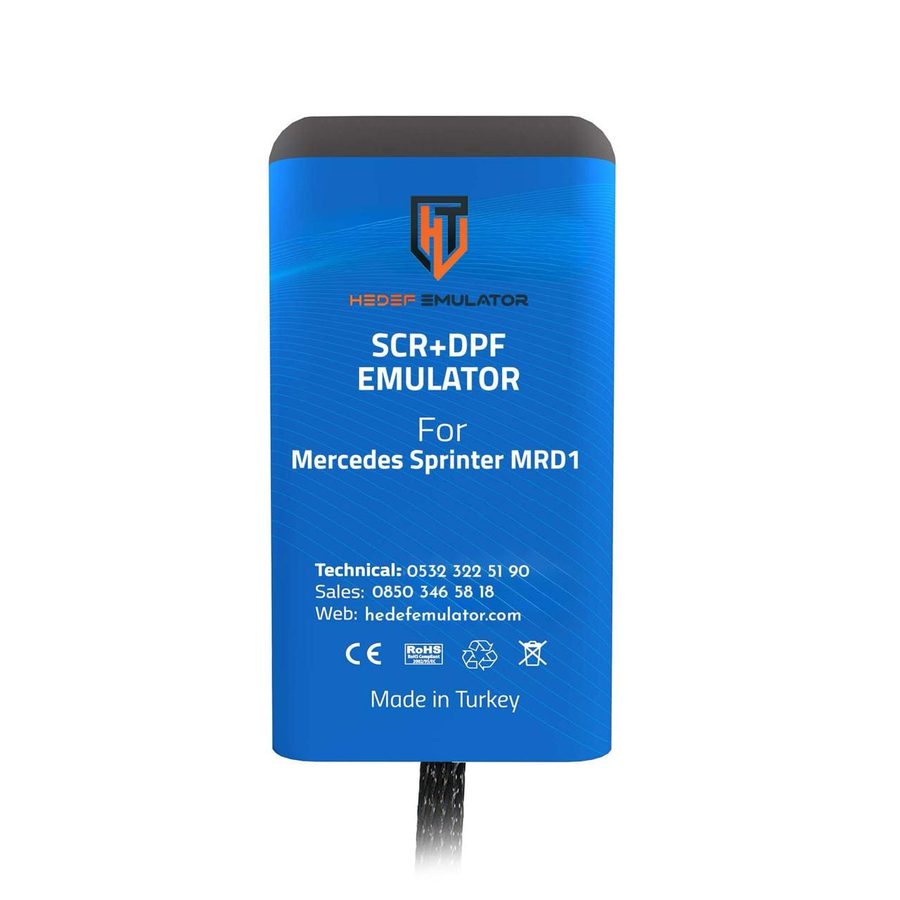
The AdBlue emulator is a piece of hardware designed precisely to break that loop. Let me be clear: an emulator is not software or a remap. It’s a plug-and-play electronic module that fits into the van’s original socket. It never touches the ECU software, needs no cut-and-solder work, fits in minutes and, when needed (for example when selling the van or taking it for inspection), can be removed to return it to standard. That’s exactly why the locked-ECU question on the Ducato doesn’t affect the emulator: as long as you don’t touch the software, the lock isn’t an obstacle.
I explained the differences between the emulator and the software/remap approach, and why fleets prefer removable hardware, from the ground up in the What is AdBlue (SCR) and why it’s deleted article.
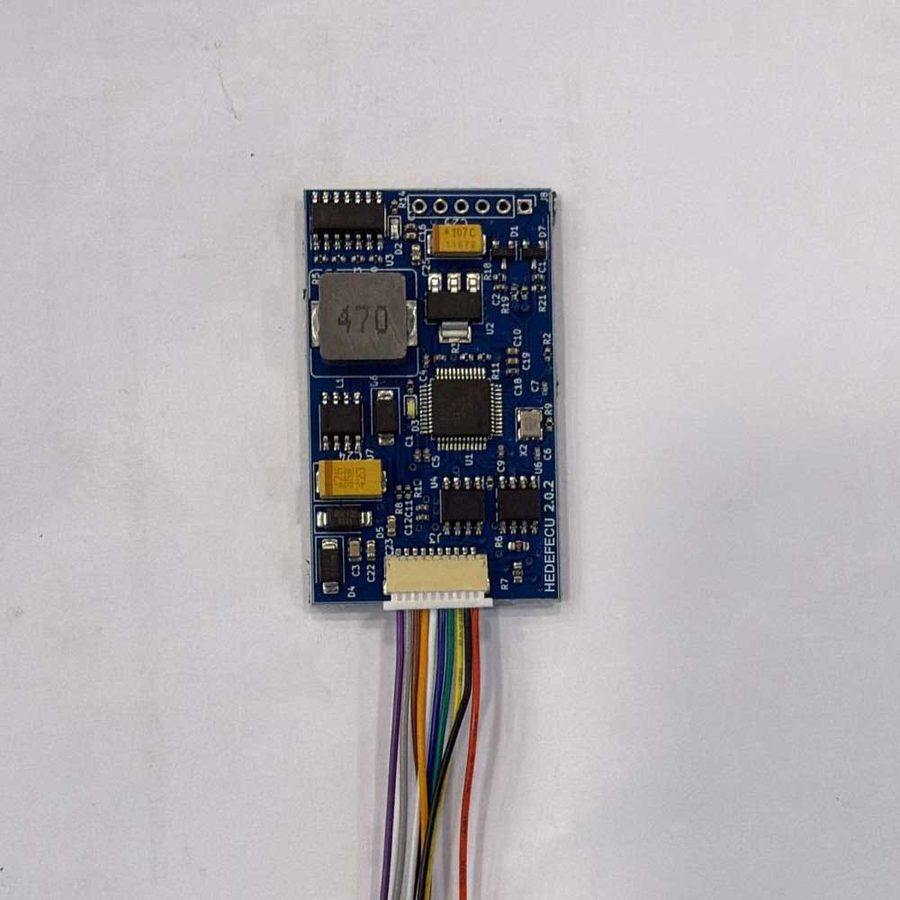 RECOMMENDED DEVICEFord Transit SID212 AdBlue SCR DPF Removal EmulatorView product →
At Hedef Emulator we’ve been in this business for over 12 years. More than 428 products for 94 makes, each with a 2-year warranty and free shipping. From the Transit to the Sprinter, from the Master to the Ducato, we can pin down the right socket and the right model together for every van in your fleet. Send us your van’s model and engine type on WhatsApp (0507 687 18 40) and our 24/7 support team will tell you the right hardware within minutes. And if it doesn’t fit or you change your mind, you have 14 days to return it.
On the fleet side the approach that pays off most is to get ahead on the models that break down often, rather than waiting for a van to fault. You’ve seen from the table above which van has which weak spot; the rest is matching the right hardware to the right van.
Legal notice: Modifying or deleting emissions hardware is subject to legal restrictions on road use and inspection in many countries. Our products are supplied for off-road use, export, racing and testing purposes; legal responsibility rests with the user.
Frequently Asked Questions
What is the most common cause of an AdBlue fault on a Ford Transit?
Field data shows the metering pump is by far the most common source of AdBlue faults on the Transit. These vans run the SID212 control unit, and the pump typically tires out at high mileage; replacing it on its own can be a costly item.
Why doesn't the Sprinter flag 'AdBlue not working' straight away?
On OM651/OM654 Sprinters, the MRD1 controller only warns after three consecutive failed self-tests. So the P13DF or P203B code you see means the fault has been running for a while; the light comes on once the system has confirmed itself three times, not on the first error.
Does a DF050 code on a Renault Master point to a single part?
No. On the SID321-based Master and Trafic, DF050 is a collective code; it can point to the injector, the metering unit or any of the NOx sensors. Because the metering pump is integrated into the tank and isn't sold separately, the cost climbs sharply if the pump is the culprit.
Why do city-based fleet vans suffer AdBlue faults more often?
In stop-start traffic the exhaust never gets hot enough to bring the SCR catalyst up to temperature. Low heat stops the AdBlue reacting fully, so deposits and crystallisation build up; sensors and the metering pump die far earlier than expected in that environment.
Will an AdBlue emulator damage the engine ECU on a Transit or Sprinter?
No. An emulator isn't software or a remap, it's a plug-and-play piece of hardware that fits into the original socket. It never touches the ECU software, needs no cut-and-solder work, fits in minutes and can be removed to return the van to standard whenever needed.
Recommended Products

Looking for the right emulator for your vehicle?
Send us your make and chassis details and our experts will find the right solution in seconds.